THE TAKEAWAY
Prepare early enough to act on what you find, not just to tick a box before leaving.
Give the trip its own short brief
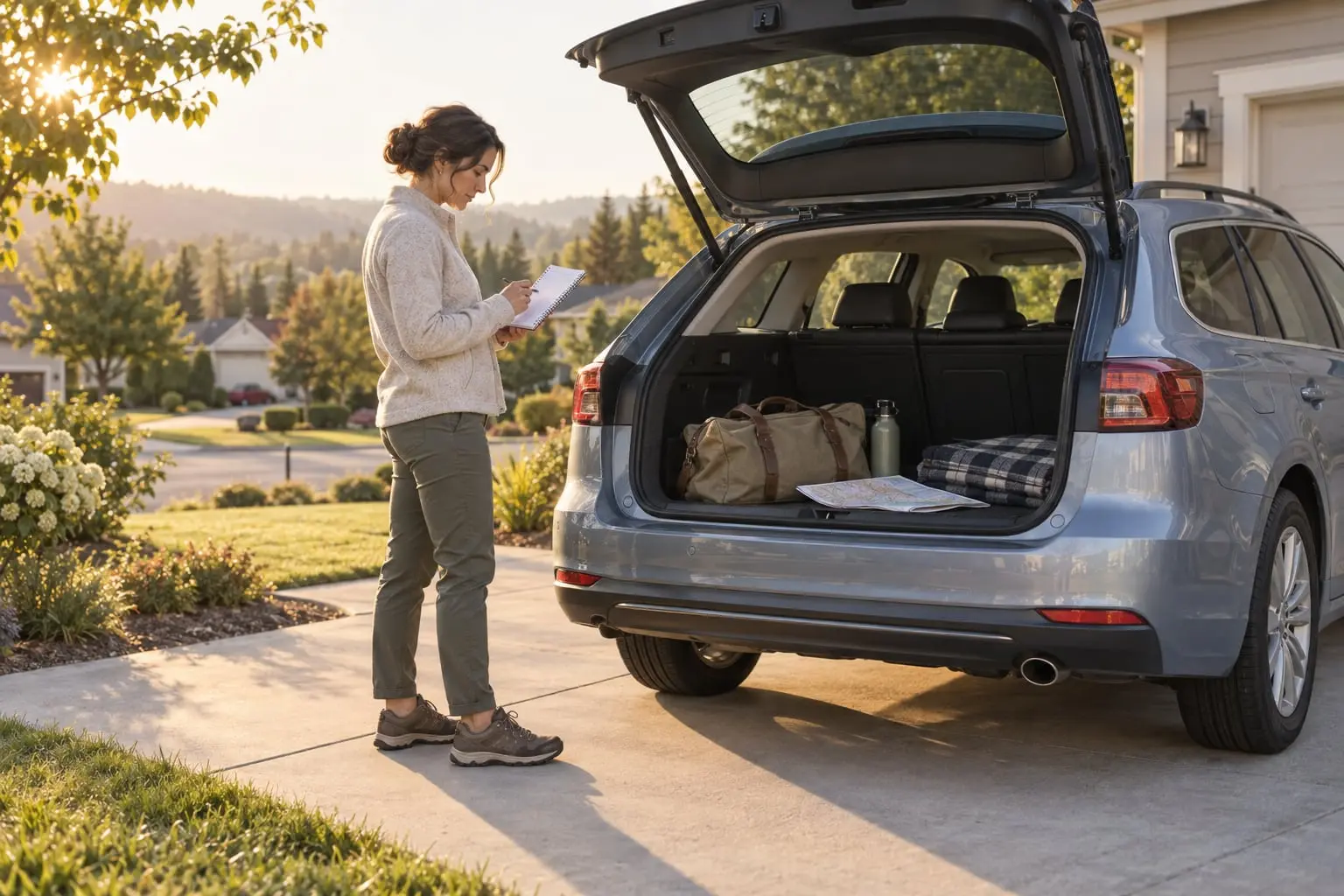
A long drive changes the questions you bring to a service appointment. Start a note with the departure date, approximate route, expected passengers and luggage, and any unfamiliar behavior you have noticed. You are not diagnosing the car; you are giving the shop context. Make that note several days before departure rather than while packing the trunk. If the car needs attention, a little calendar space gives you options instead of turning every recommendation into a last-minute decision.
Check the basics against your actual vehicle
NHTSA's trip guidance calls for attention to tires, lights, fluid levels and worn wipers. Use your owner's manual for the correct procedures and specifications rather than a universal service package. Tire pressure should follow the vehicle label, not the maximum printed on the tire. If you notice damage or a leak, ask a qualified shop to assess it. A quick driveway check is a starting point, not proof that the vehicle is ready for every condition.
Leave the appointment with answers you can use
Bring the same note to the appointment and ask the adviser to separate observations from recommended work. Record what was inspected, what still needs assessment, and when you should follow up. If you describe an intermittent sound, include when it happens instead of trying to imitate it from memory at the counter. Keep the final invoice with your trip notes so that another shop can understand what was done if you need help away from home.
- Which of my concerns did you assess?
- Is anything unresolved before this trip?
- What change should prompt me to contact you again?
- Where can I find the written service record?
Make useful information easy to reach
Create one small travel folder on your phone, with an offline copy where practical. Include your roadside-assistance contact, the shop's number, your vehicle details and the service note. Decide who will make a call and share your location if plans change. An organized folder is more useful than ten screenshots scattered across different conversations. Set it up while parked at home, then leave navigation and messages to a passenger or handle them after stopping safely.
Keep the plan flexible
A prepared car still cannot guarantee an uneventful trip. NHTSA recommends reviewing weather and route conditions and planning breaks. Treat your arrival time as a plan, not a deadline worth driving through fatigue or worsening conditions. Before leaving, have a brief conversation with your passengers about the first stop and how to handle a delay. The useful outcome of preparation is not a promise that nothing will go wrong; it is having fewer decisions to improvise when something changes.