THE TAKEAWAY
Your owner's manual sets the schedule. Your service records tell you where to begin.
There is no universal mileage milestone
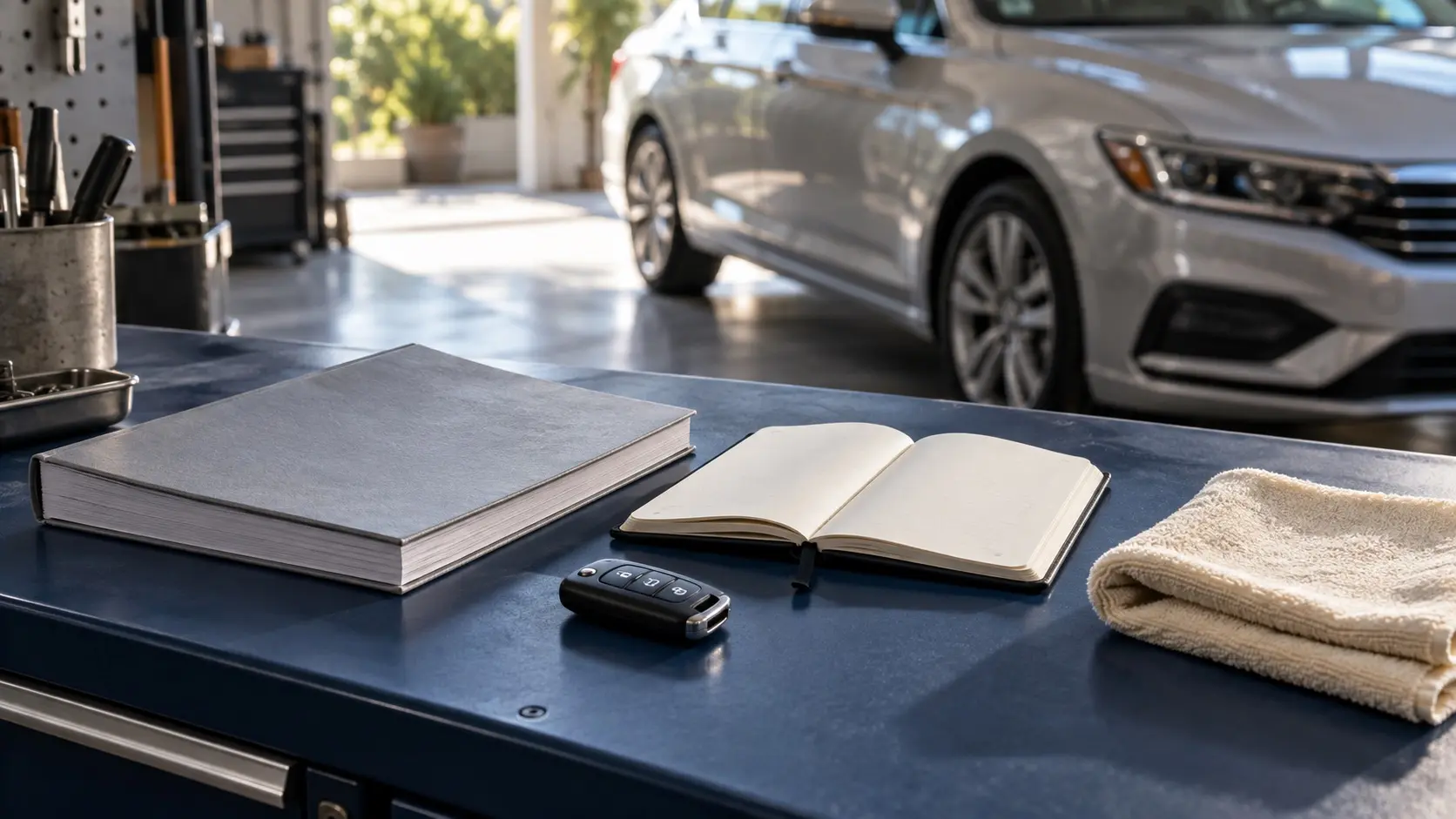
Reaching a round number on the odometer is a good reminder to look at your records, not an automatic reason to buy a package of services. The right plan starts with the manufacturer's schedule for your vehicle and driving conditions, as the FTC advises. Find the manual for the correct model year and powertrain. Keep its maintenance section somewhere you can open easily, alongside the car's registration details and existing invoices.
Turn the paperwork into one useful page
Build a short record with four columns: service, date, mileage, and where the work was done. Add only what you can confirm. If you bought a used car and a service is unknown, mark it unknown rather than guessing that a previous owner took care of it. This simple distinction gives your next shop a more useful starting point than a folder of screenshots with no dates.
Separate three different conversations
Scheduled maintenance, a new symptom, and an optional convenience are not the same appointment request. Keep three small lists so a wiper concern does not disappear inside a discussion about a mileage package. Describe what you have noticed without assigning a cause. Ask the adviser to explain which list each recommendation belongs on, then record the agreed action.
- Due by schedule: items supported by the vehicle's maintenance guide.
- Needs assessment: a new sound, warning, leak, or change in behavior.
- Nice to have: comfort or appearance work you are considering.
Put the next reminder in your calendar
After a service visit, update your page while the invoice is still easy to find. Record the next date or mileage specified for the relevant task; do not replace a time limit with a mileage-only reminder. Add a separate reminder to check for recalls using NHTSA's VIN lookup. That tool can identify certain unrepaired safety recalls, but a result is not a complete vehicle health report or a substitute for investigating a symptom.
Make the plan easy to hand over
Bring the one-page record to your next visit and explain any changes in how you use the car. A longer commute, extended parking, or an upcoming trip is useful context for a conversation, not a reason to invent your own interval. Ask what needs clarification and leave with a written next step. A practical maintenance plan is something you can keep current in a few minutes, not a spreadsheet you abandon after the first service.