THE TAKEAWAY
Use your vehicle's pressure specification, keep a simple record, and do not ignore a tire that repeatedly loses air.
Find the number that belongs to your car
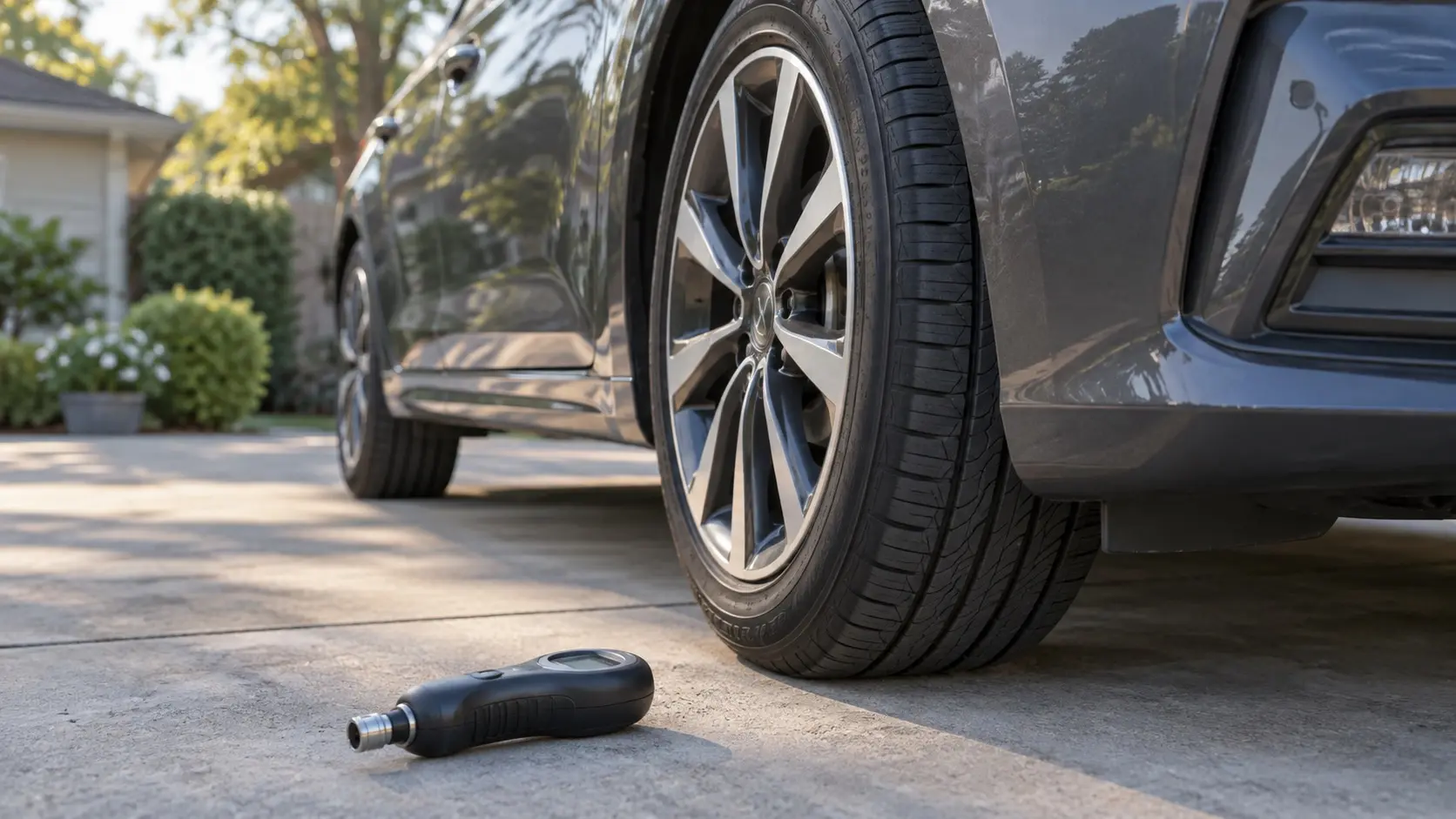
NHTSA recommends checking tire pressure at least monthly, with tires cold: the vehicle has not been driven for at least three hours. Use the pressure on the vehicle's tire-information label or in its manual, not the maximum shown on the tire sidewall. Front and rear specifications may differ. Save a photo of your label while parked so the right information is easy to find next time.
Make a check repeatable
Choose a safe, level place away from traffic and set aside a few unhurried minutes. Keep a gauge where you can find it and follow its instructions. Write readings against wheel positions rather than relying on memory. Include the spare if your vehicle has one and follow its separate specification. You are building a small record, not trying to diagnose every possible tire problem yourself.
- Record the date and whether the tires were cold.
- Label each reading: front left, front right, rear left, rear right.
- Note any pressure adjustment or repeated loss at the same wheel.
Give the visible surfaces a moment
While the car is parked, look for anything visibly different between the tires. A bulge, exposed cord, deep cut, or seriously low tire calls for professional help rather than another journey to see what happens. Uneven wear is worth documenting for a tire shop. Do not crawl underneath the vehicle or reach into a position where it could move against you. If you cannot inspect something comfortably from a safe position, leave it to the shop.
Treat a dashboard alert as a prompt
A tire-pressure monitoring system does not replace regular gauge checks; Bridgestone explains that it warns of significant underinflation. Read your manual for the meaning of a steady or flashing alert on your particular vehicle. A light going out is not a repair record. If one wheel needs air repeatedly, share the pattern with a shop instead of building endless top-ups into your routine.
Bring observations, not a guessed diagnosis
When booking, describe which wheel is involved, how often the problem returns, and whether it followed a pothole or curb impact. Ask what the assessment includes and whether they need the car left for a longer period. Keep the final findings with your pressure notes. That short history helps make the next conversation specific and prevents an intermittent concern from becoming a vague complaint about how the car feels.